Newgrange
💀💀💀💀
3.5/5
97 votes
About Newgrange
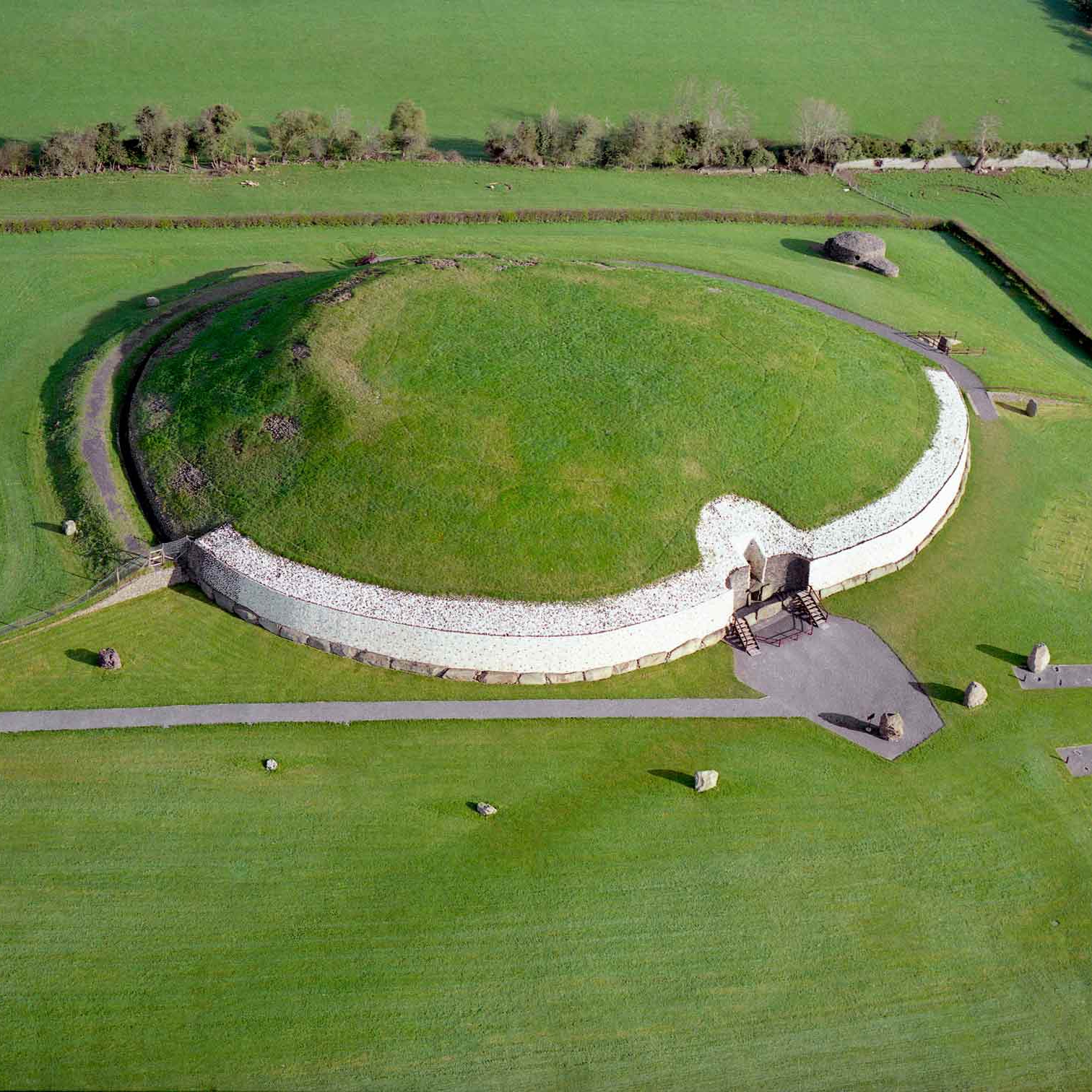
Ireland is particularly rich in megalith tombs, having over 500 documented sites. Constructing these communal graves for cremated or skeletal remains seems to have been not only an expression of reverence for ancestors but also a means of establishing claims to land, and megalith tombs are frequently located on prominent sites. Among the most impressive is the passage grave at Newgrange, County Meath, built about 3100 BCE on the crest of a hill overlooking the Boyne river. An earthen mound nearly 300 feet in diameter and thirty-six feet high covers the tomb, with the weight of the soil providing stability for the megaliths below. Decorated boulders surround the perimeter of the mound. (The white quartz facing is a modern reconstruction based on excavations, providing visibility from a distance.) The south-facing entry leads to a sixty-two-foot-long, upward-sloping passage covered by stone lintels terminating in a cruciform chamber covered by a beehive corbeled ceiling twenty feet high. Parts of the stonework in the passage and chamber are decorated with incised patterns, including diamond shapes and spirals, whose meanings are unknown. The whole construction is carefully oriented so that, in the five days around the winter solstice, light from the rising sun enters through the doorway and a transom-like light box creeps along the passage and illuminates the chamber within for about fifteen minutes. To those fortunate enough to witness this annual event (the only time there is any light in the interior), the effect is magical and very moving. Constructing such a massive tomb (and there are two others on the same scale nearby) would have required sustained effort over many years. Available technology provided nothing harder than copper or bronze tools for shaping stone, and there were no wheeled vehicles or draft animals to assist with transport.
Rate This Cursed Place
How cursed is Newgrange? Drag to vote 1-5 skulls.
Photos of Newgrange




Comments (0)
Add your comment