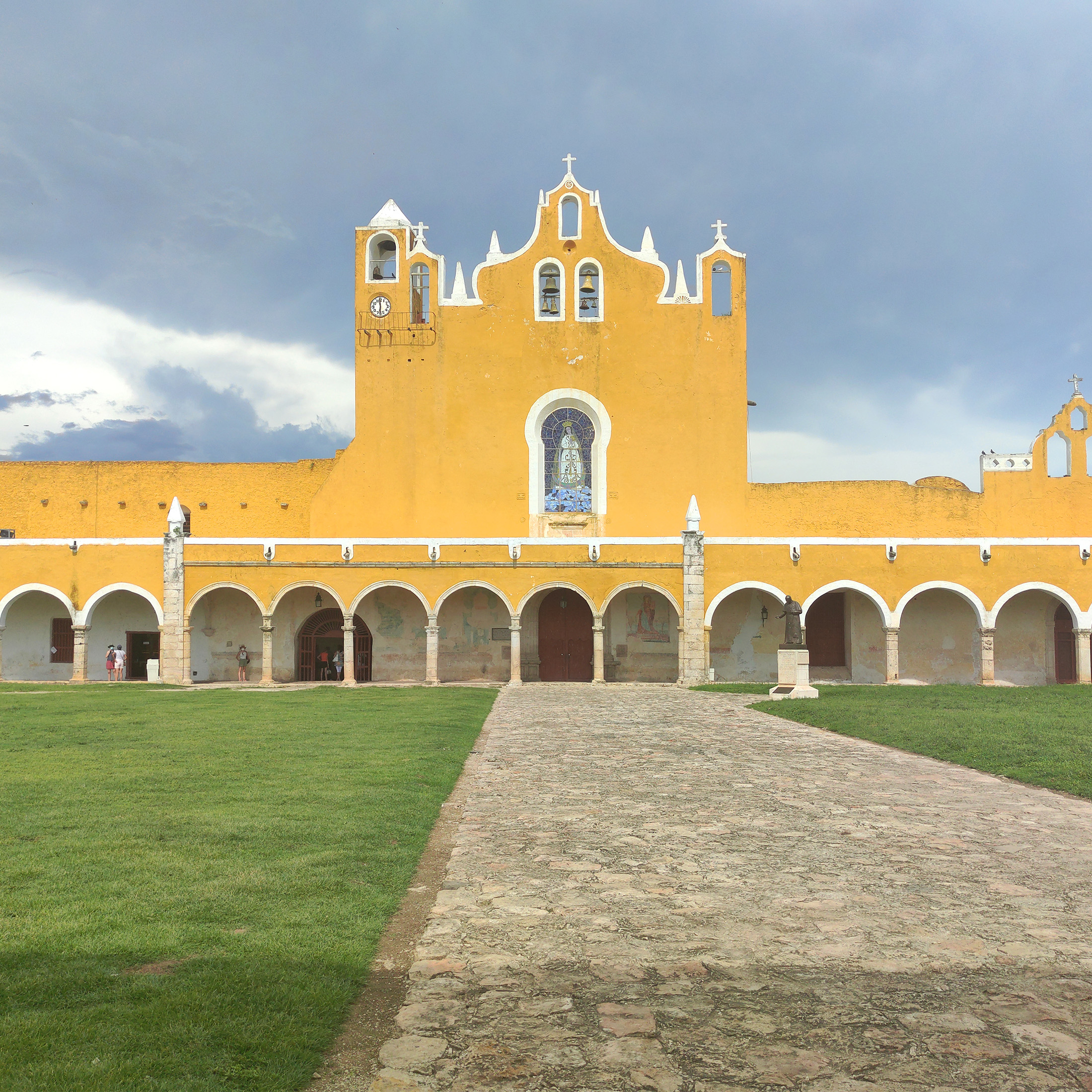
San Antonio de Padua
💀💀💀💀
3.9/5
66 votes
About San Antonio de Padua
This article is part of Infrastructural Urbanism , a series curated by Hidden Architecture where we explore the evolutionary potential over time of certain urban and architectural structures. The infrastructural nature of these projects allows them to accommodate and assume the uncertainty of future development as a project tool. Este articulo es parte de Urbanismo Infraestructural , serie que explora el potencial evolutivo a lo largo del tiempo de determinadas estructuras urbanas y arquitectónicas. El carácter de infraestructura de estos proyectos les permite albergar y asumir la incertidumbre de un desarrollo futuro como herramienta de proyecto. According to historians and archaeologists specialised in Mesoamerican cultures, the region of the present city of Izamal began to be inhabited in the 8th century B.C., during the Preclassic period of the Mayan civilisation. However, it was not until the 6th century A.D. that this settlement became important. Surrounded by extensive areas of very fertile territory, the city of Itzmal was one of the most important cities in the Yucatan region, as well as the social and political centre of the province of Aj K'in Ch'eel, a territory of more than six thousand square metres ordered and controlled by means of a dense network of Mayan roads, the sacbeo'ob. Según los historiadores y arqueólogos especialistas en culturas mesoamericanas, la región de la actual ciudad de Izamal comenzó a ser habitada en el siglo VIII a.C, durante el periodo Preclásico de la civilización maya. No será, sin embargo, hasta el siglo VI d.C cuando este asentamiento adquiera relevancia.
Rate This Cursed Place
How cursed is San Antonio de Padua? Drag to vote 1-5 skulls.
Photos of San Antonio de Padua



Comments (0)
Add your comment