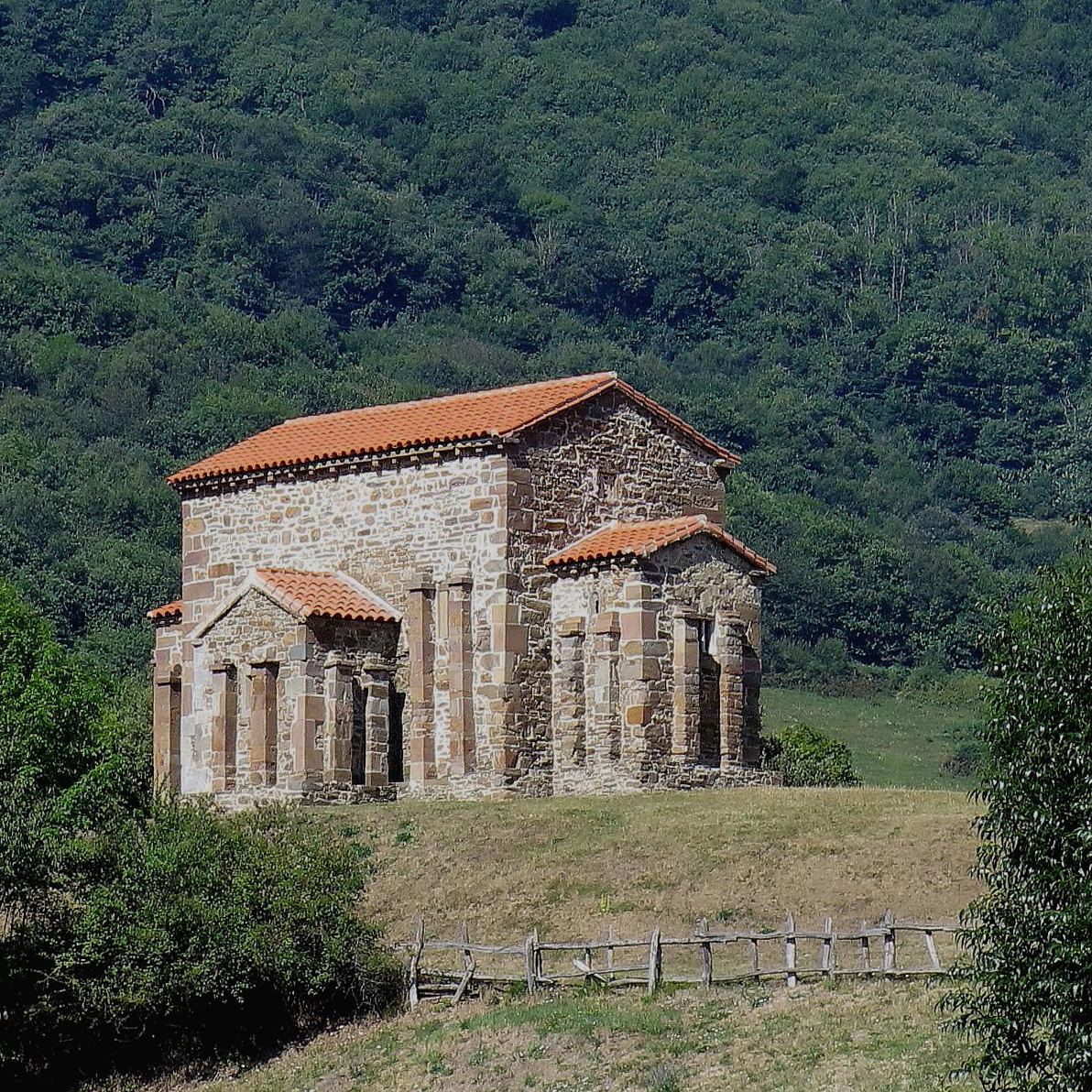
Santa Cristina de Lena
💀💀💀💀
3.8/5
61 votes
About Santa Cristina de Lena
In the 9th century the flame of Christianity was kept alive in the Iberian peninsula in the tiny Kingdom of the Asturias. Here an innovative pre-Romanesque architectural style was created that was to play a significant role in the development of the religious architecture of the peninsula. Its highest achievements can be seen in the churches of Santa María del Naranco, San Miguel de Lillo, Santa Cristina de Lena, the Cámara Santa and San Julián de los Prados, in and around the ancient capital city of Oviedo. Associated with them is the remarkable contemporary hydraulic engineering structure known as La Foncalada. En el siglo IX, el pequeño reino de Asturias mantuvo viva la llama del cristianismo en la Península Ibérica. En su territorio nació un estilo innovador de arquitectura prerrománica que desempeñaría, más tarde, un importante papel en el desarrollo de la arquitectura religiosa de toda la Península. Emplazadas en la capital asturiana, Oviedo, y en sus alrededores, las iglesias de Santa María del Naranco, San Miguel de Lillo, Santa Cristina de Lena, San Julián de los Prados y la Cámara Santa de la catedral de San Salvador son los edificios más representativos de ese estilo. La notable obra de ingeniería hidráulica conocida por el nombre de La Foncalada forma también parte del sitio Overall, these Asturian constructions of small dimensions (…) share almost all the characteristics of European architecture of that time : co-existence of multiple typological design, a certain spatial compartmentalization, evident from exterior vestiges, use of material similar to camouflage, rather sombre interiors, heterogeneous decoration based on the panoply of Late Antiquity. These characteristics are due for the most part to their promoters: small monastic communities.
Rate This Cursed Place
How cursed is Santa Cristina de Lena? Drag to vote 1-5 skulls.
Photos of Santa Cristina de Lena



Comments (0)
Add your comment