
The Towers of Kaiping
💀💀💀
3.1/5
67 votes
About The Towers of Kaiping
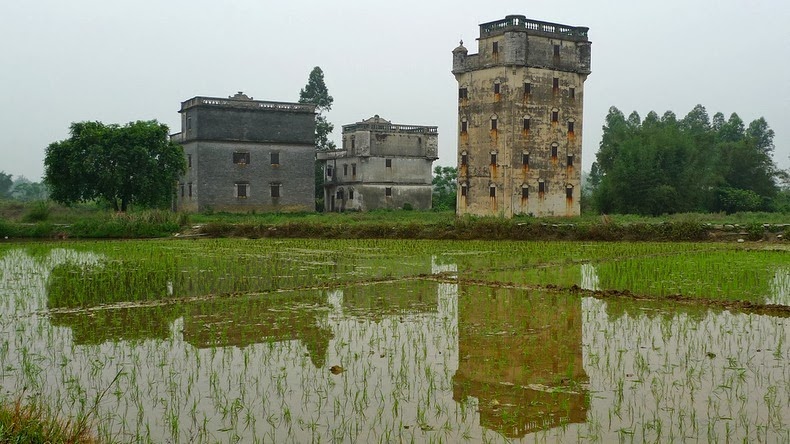
Throughout Kaiping County in China, are scattered hundreds of fortified multi-storey towers called Diaolou. Built of stone, brick or concrete, these buildings represent a complex and flamboyant fusion between Chinese and Western architectural styles. During the Qing Dynasty of late 19th and early 20th centuries, these buildings were used as temporary refuge by several families or residential towers by individual rich families and as fortified residences, and watch towers. During the 1920s and 1930s, there were more than three thousand of these structures. Today, approximately 1,833 Diaolou remain standing in Kaiping, and approximately 500 in Taishan. 20 of the most symbolic ones are inscribed on UNESCO’s World Heritage List. Photo credit The area that is now Kaiping, traditionally belonged to the Yue people and the Han people who came in from the Central Plains of China and intermingled with the indigenous population. They cultivated rice and fished. From the mid 16th century, many villagers began to engage in trade on the nearby coast, sailing in wooden junks to south-east Asia. By the early 19th century, these poor farmers have started to travel to as far as America, drawn by the lure of the gold rush. As the 19th century drew to a close, the Chinese community had begun to amass large savings, and after the first World War, with rapid economic expansion in many countries, the fortunes of the overseas Chinese steadily improved. What they did not believe they had achieved however, was social recognition for their input into the expansion of the countries they had chosen to live in. Their dreams came to be associated with contributing to the wellbeing of their ancestral villages or returning to live there, and many did just that building conspicuous tower houses. The influx of wealthy people attracted the attention of the bandits who raided, robbed and kidnapped.
Rate This Cursed Place
How cursed is The Towers of Kaiping? Drag to vote 1-5 skulls.
Photos of The Towers of Kaiping



Comments (0)
Add your comment